Before the Sun Comes Up: Inside Canada's Gritty Early-Morning Training Scenes
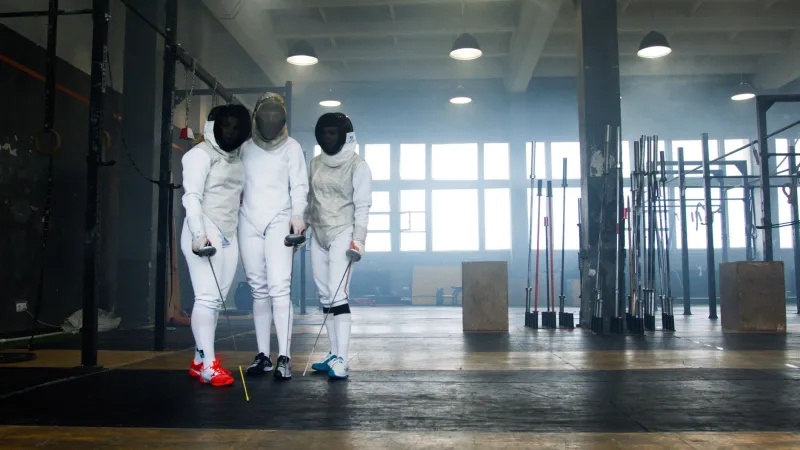
The alarm goes off at 5:15. Outside, it's dark. In January, it might be minus twenty.
And yet, all across this country, people are lacing up.
They're pulling into parking lots where the asphalt is glazed with ice, hauling gear bags through doors that haven't fully warmed up yet, and getting after it before most of Canada has brewed its first coffee. No cameras. No fanfare. Just the work.
These are the training communities that quietly produce Canadian athletes — and they're worth knowing about.
The Boxing Gyms of Toronto's East End
Step into a serious boxing gym before sunrise and you'll understand immediately why the sport produces some of the most mentally tough athletes on the planet.
In Toronto's east end — neighbourhoods like Scarborough and East York — a handful of boxing clubs open their doors before 6 AM to a mix of competitive fighters, amateur boxers, and people who just need to hit something before a long day. The equipment is often well-worn. The lighting is rarely flattering. The music is loud and the instructions are louder.
What these gyms offer isn't comfort — it's accountability. Show up, put in your rounds, earn your place on the floor. There's no modified version of a boxing workout. You either do the work or you don't, and the people around you know the difference.
Boxing coaches in this city have long understood something that sports science is only now catching up to: training in community creates a form of social accountability that no app or personal goal-tracking system can replicate. When someone you respect is watching you skip rope at 6:10 in the morning, you don't sandbag your effort.
Alberta's CrossFit Culture: Where the Bar Is Always Moving
In Calgary and Edmonton, CrossFit boxes have quietly built some of the most dedicated early-morning training communities in the country.
This isn't a knock on the sport's sometimes polarizing reputation — it's an acknowledgment of what actually happens inside these facilities before dawn. Athletes arrive in the dark, work through structured programming that combines strength, conditioning, and Olympic lifting, and leave drenched and spent before the rest of the city starts its commute.
What makes Alberta's CrossFit scene particularly interesting is the way it blends competitive athletes with everyday people who simply refuse to treat fitness as optional. A provincial-level competitor might be sharing a barbell with a trades worker who's been training at 5:45 AM for three years straight. The culture doesn't separate them. The whiteboard doesn't care about your background — it only cares about your time.
That levelling effect is something coaches in this community talk about often. When the work is the same and the standard is shared, it creates a different kind of team. You're not training for each other in a formal sense. You're just training with each other, and the presence of other people doing hard things makes you do harder things. Simple as that.
Manitoba's Outdoor Track Clubs: Cold-Weather Conditioning Done Right
If you want a true gut-check on Canadian athletic grit, look at the track clubs in Winnipeg and Brandon that run outdoor sessions well into October — and resume them in March before the ground has fully thawed.
These athletes aren't training in spite of the cold. They're training through it, and there's a philosophy behind that choice. Running on uncertain surfaces, managing breath in frigid air, and staying focused when your body is screaming for warmth — these are conditions that build something specific. Coaches here will tell you their athletes arrive at indoor competitions in the winter already adapted to discomfort. The competition feels almost easy by comparison.
The community aspect is critical here too. Nobody runs alone at 6 AM in a Manitoba winter by choice. You go because your training partners are going. You stay because leaving would mean letting them down. It's a social contract written in shared suffering, and it produces athletes who don't fold when conditions get hard.
BC Swim Clubs: Yardage, Silence, and the Long Game
Swimming might be the sport that best represents the unglamorous side of athletic development. There's no crowd, no contact, no dynamic play. There's a black line on the bottom of a pool and a clock on the wall, and you swim toward one while the other ticks.
In British Columbia — particularly in the Lower Mainland and on Vancouver Island — youth and masters swim clubs have built cultures around the 5:30 AM start time that are almost monastic in their discipline. Coaches expect athletes at the wall, goggled up and ready, before the rest of the facility has unlocked its front doors.
What happens in those early-morning lanes isn't just physical. Swimmers in these programs talk about the pre-dawn session as a kind of mental reset — a space where the only thing that exists is the water and the effort. No phone, no social noise, no distraction. Just the accumulated yardage of a long-term process.
BC has consistently produced elite swimmers at both the national and international level, and the coaches who've built these programs will point to the culture of consistent early-morning work as the foundation. Talent matters, but the willingness to show up at 5:30 AM in November, in a pool that hasn't quite warmed up yet, is what separates the ones who make it.
What All of These Places Have in Common
A boxing gym in Scarborough and a swim club in Victoria don't look anything alike. The athletes are different, the sports are different, the sounds and smells are completely different.
But spend a morning in both and you'll find the same thing: people who've made a decision that most people haven't. Not a dramatic, once-in-a-lifetime decision — a quiet, daily one. The decision to get up when it's dark and cold and easier not to. The decision to prioritize the process over the result. The decision to belong to something that demands something of you.
That's what Canada's early-morning training communities are really about. Not the specific sport or the specific facility. The decision.
And the ones who keep making it, day after day, in gyms and rinks and pools that nobody's filming — those are the ones who eventually stand somewhere worth watching.
Train at an early-morning facility that deserves a spotlight? Tell us about it. Fight Like A Canadian wants to hear about the communities doing the work before the rest of the world wakes up.