Rest Is a Weapon: How Canada's Best Athletes Train Harder by Doing Less
There's a version of athletic culture that glorifies the grind at all costs. Every rep, every kilometre, every hour in the gym stacked on top of the last one. No days off. Sleep when you're dead. You've seen the Instagram posts.
And then there's what actually works.
Canada's top-tier athletes — the ones quietly putting up numbers on the world stage, the ones who keep showing up when others fall apart — have quietly figured out something that takes most competitors years to learn: recovery isn't the opposite of training. It's part of it. A big part.
The athletes who get this right aren't training less. They're training smarter. And in a country where the conditions are already tough, where resources don't always match ambition, and where grit is basically part of the national identity, mastering the recovery game might be the most Canadian competitive advantage there is.
The Science Behind Why Rest Makes You Stronger
Here's the thing about adaptation — it doesn't happen in the gym. It happens after.
When you push your body through a hard session, you're essentially breaking tissue down. Muscle fibres tear at the microscopic level. Your central nervous system takes a hit. Your glycogen stores get depleted. That's the point. But the actual strength gains, the speed improvements, the increased capacity — all of that is built during the recovery window that follows.
Skip that window, or shortchange it, and you're not just tired. You're actively undermining the work you already put in.
Sports physiologists call this supercompensation — the process by which the body rebuilds itself slightly stronger than it was before, as long as it's given adequate time and resources to do so. Push too hard, too often, without enough recovery built in, and you plateau. Or worse, you break down entirely.
This is why Canada's high-performance programs have increasingly integrated recovery as a structured, non-negotiable component of training plans — not an afterthought, not something athletes squeeze in when they feel like it, but a scheduled priority with as much weight as the hardest workout on the calendar.
Active Recovery: Moving to Heal
One of the biggest misconceptions around recovery is that it means sitting on the couch doing nothing. For serious athletes, that's rarely the whole story.
Active recovery — low-intensity movement designed to flush out metabolic waste, increase blood flow, and keep the body mobile without adding stress — is a cornerstone of what elite Canadian competitors do between hard sessions. Think easy cycling, light swimming, yoga, or even a slow walk through a snowy trail in January. The intensity is the point: low enough that you're not creating new damage, high enough to keep the system moving.
Many Canadian winter sport athletes, from cross-country skiers to speed skaters, have been doing versions of this for decades out of necessity — their training cycles demand back-to-back effort with very little room for full shutdown days. They've learned to layer intensities, using easier movement as a bridge between hard efforts rather than a gap.
Cold as a Tool, Not Just a Climate
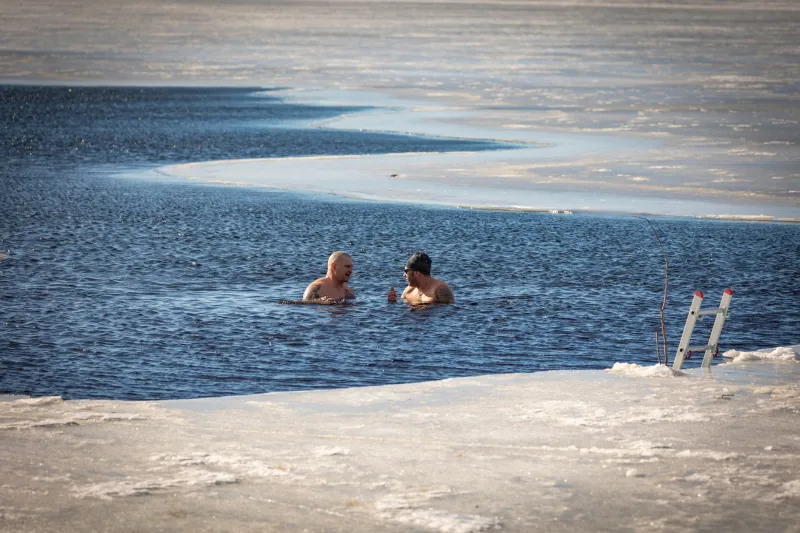
If there's one recovery method that Canada has a cultural claim on, it's cold exposure. Ice baths, cold plunges, outdoor swims in frigid lakes — this isn't a new wellness trend for most Canadian athletes. It's just Tuesday in February.
The physiology backs it up. Cold water immersion causes vasoconstriction — blood vessels tighten, flushing metabolic byproducts out of muscle tissue. When you warm back up, vasodilation brings fresh, oxygenated blood rushing back in. The result: reduced inflammation, faster clearance of the stuff that makes you sore, and a measurable improvement in how quickly you're ready to go hard again.
Beyond the physical mechanism, there's a mental component that Canadian athletes understand intuitively. Getting into cold water when every instinct tells you not to is a form of mental training. It builds tolerance. It teaches your nervous system to stay calm under discomfort. And when you're competing at the highest level, that kind of psychological resilience shows up when it matters most.
Sleep: The Recovery Tool Everyone Undervalues
If you could take a legal supplement that improved reaction time, boosted hormone production, sharpened decision-making, accelerated muscle repair, and reduced injury risk — you'd take it every single day without question.
That supplement is sleep. And most athletes still don't take it seriously enough.
Elite Canadian athletes who work with high-performance coaches increasingly follow structured sleep protocols — not just aiming for a certain number of hours, but paying attention to sleep quality, consistency of sleep and wake times, and the environment they're sleeping in. Blackout curtains, temperature regulation, limiting screen exposure before bed — these aren't luxury habits. They're performance tools.
During deep sleep stages, the body releases growth hormone, which is critical for muscle repair and recovery. REM sleep plays a key role in consolidating the motor patterns learned during training — essentially, your brain is rehearsing the movements you worked on that day. Cut your sleep short and you're leaving those adaptations on the table.
Some Canadian high-performance programs have started tracking sleep data alongside training loads, using wearables to flag when an athlete's recovery is insufficient before the next hard session. The idea is simple: you can't out-train a sleep deficit.
Nutrition Timing and the Recovery Window
What you eat matters. When you eat it matters almost as much.
In the 30-to-60-minute window after a hard training session, your muscles are primed to absorb nutrients — particularly a combination of protein and carbohydrates. Protein provides the amino acids needed to repair and rebuild muscle tissue. Carbohydrates replenish glycogen stores so you're not starting the next session running on empty.
Canadian athletes competing across diverse sports — from rugby to rowing to wrestling — have increasingly worked with registered dietitians to dial in not just overall nutrition, but timing strategies that align with their training schedules. It's not complicated, but it requires intention. A hard session followed by no food for three hours is a missed opportunity. A well-timed recovery meal or shake is a small habit that compounds over a full season.
Hydration is part of this equation too. Dehydration impairs almost every physiological process involved in recovery. Even mild fluid deficits affect muscle function and cognitive performance. For athletes training through Canada's extreme seasonal temperatures — brutal summer heat in Ontario, dry cold in Alberta — staying on top of hydration is a year-round discipline, not just a summer concern.
The Mental Side of Recovery
Recovery isn't only physical. The mental load of high-level competition and training is real, and it accumulates just like physical fatigue does.
Canada's best competitors — the ones who sustain performance over long careers — tend to be deliberate about mental restoration too. That might look like time away from sport-related media and analysis. It might be mindfulness practice, time in nature, or simply protecting certain hours of the day as non-negotiable personal time. The specifics vary. The principle doesn't: you can't pour from an empty cup, and the mental reservoir needs refilling just like the physical one does.
The stigma around this is fading. More Canadian athletes are openly discussing the importance of mental recovery as part of their overall performance strategy, and that cultural shift is a good one.
The Bottom Line
The best athletes in this country have figured out that fighting hard doesn't mean fighting constantly. It means being smart enough to know when the best thing you can do for your performance is rest, refuel, sleep, and come back sharper than you left.
Recovery done right isn't passive. It's intentional. It's disciplined. And it's one of the most underrated competitive weapons in any athlete's arsenal.
Train hard. Recover harder. Rise up ready.