Roots and Reps: Inside the Tight-Knit Training Communities Quietly Building Canada's Next Champions
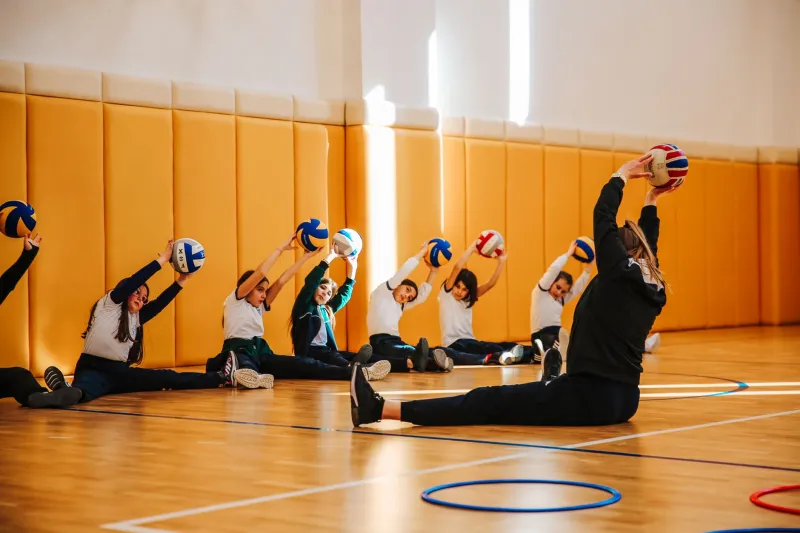
Forget the national training centres for a second. Forget the high-performance funding streams and the sport science labs and the carefully managed development pathways. Some of the most dangerous athletes Canada has ever produced didn't come up through any of that.
They came up through a church basement in Brampton. A converted warehouse in East Vancouver. A community rink in Sudbury that hasn't been renovated since 1987. A track club in Moncton where the coach drives an hour each way and charges next to nothing because that's not why they're there.
These are the places that don't get written about. And they are absolutely cooking.
The Myth of the Polished Pathway
There's a comfortable narrative in Canadian sport that goes something like this: talented kid gets spotted, enters the provincial development system, gets refined through national programs, emerges as an elite competitor. Clean, logical, scalable.
Except that's not how a lot of it actually works.
Talk to enough Canadian coaches and athletes and a different picture starts to form. One where the polished pathway produces technically sound competitors who sometimes lack something harder to coach — hunger, edge, the ability to grind when everything is uncomfortable. And where the scrappier, community-built athletes show up to national competitions and quietly outperform their development scores.
It's not that the formal system is bad. It's that it doesn't have a monopoly on excellence. And in the gaps between the official structures, something genuinely interesting is happening.
What Makes a Community Training Environment Different
Walk into one of these grassroots training hubs and the first thing you notice isn't the equipment — because the equipment is usually fine at best and held together with duct tape at worst. What you notice is the atmosphere.
There's a particular kind of competitive pressure that exists in tight-knit training groups that's almost impossible to replicate in larger, more institutional settings. When you've been training alongside the same eight people for three years, when they've seen you at your worst and you've seen them at theirs, the standard you hold yourself to is different. You're not performing for a coach's evaluation form. You're performing for people who know exactly what you're capable of.
That peer accountability is one of the most consistently underrated training tools in sport. And it shows up most powerfully in small, community-based environments.
The Coaches Nobody's Writing Cheques For
Let's talk about the people holding these communities together, because they deserve more than a passing mention.
Across Canada, there is a quiet army of coaches who are doing elite-level development work for non-elite-level compensation. Former national team athletes running Saturday morning sessions out of community centres. Retired professionals who stayed in their hometown and decided to give back rather than chase consulting money elsewhere. Parents who got so invested in their kid's sport that they got certified, then kept going long after their kid aged out of the program.
What these coaches share — beyond the obvious dedication — is a coaching philosophy that's often more holistic than what you find in higher-resourced environments. When you don't have the luxury of specialised staff for every element of development, you end up producing coaches who understand the whole athlete. Technique, mental prep, recovery, life skills, the works.
The athletes who come out of these programs tend to be adaptable in ways that can surprise opponents and selectors alike.
The Unlikely Feeder Systems
Some of these grassroots communities have become so consistently productive that they've essentially become unofficial feeder systems for provincial and national programs — even if nobody's formally acknowledged the relationship.
Certain boxing clubs in Winnipeg have sent fighters to national championships at a rate that defies their size and resources. Track programs in smaller Ontario cities have produced more provincial medalists per athlete than programs with ten times the funding. Jiu-jitsu academies in Calgary and Edmonton have quietly built international competitors who started rolling on secondhand mats.
The through-line isn't geography or resources. It's culture. These communities have developed an internal standard of excellence that self-perpetuates. New athletes walk in and immediately understand what the expectation is — not because anyone explicitly states it, but because they can see it in the training. The bar is set by the room, not by a program document.
The Community Effect on Long-Term Development
Here's something the sport science literature is increasingly catching up to: belonging matters for athletic development. Not just psychologically, but practically.
Athletes who feel genuinely connected to their training community show up more consistently. They push through difficult training blocks more reliably. They're more likely to stay in their sport through the awkward, unglamorous middle years of development that separate those who make it from those who don't.
The grassroots training communities scattered across Canada are, often without theorising about it, doing exactly what the research recommends. They're creating environments where athletes feel accountable to something larger than their own ambition. Where missing a session isn't just a personal setback — it's letting down people who showed up for you.
That social contract is powerful. And it's not something you can manufacture by hiring the right staff or building a better facility.
What the Mainstream System Could Learn
This isn't an argument against investment in Canadian sport. More funding, better facilities, and improved athlete support systems are genuinely good things. But the mainstream development infrastructure would do well to study what these grassroots communities are actually producing — and think carefully about which elements of that culture are worth preserving as athletes move into more formalised programs.
The hunger that gets built in a community gym where you're competing for a single set of weights, or fighting for mat time, or pushing through a track session in October rain because your training partners are already out there — that's not something a national training centre can replicate by default. It has to be deliberately cultivated.
The communities doing it best aren't waiting for anyone to notice or validate what they're building. They're just showing up, putting in the work, and sending athletes out into the world who are ready for the pressure.
Sounds pretty Canadian to me.