Diploma or Dream: The Real Price Canadian Student-Athletes Pay to Go Pro
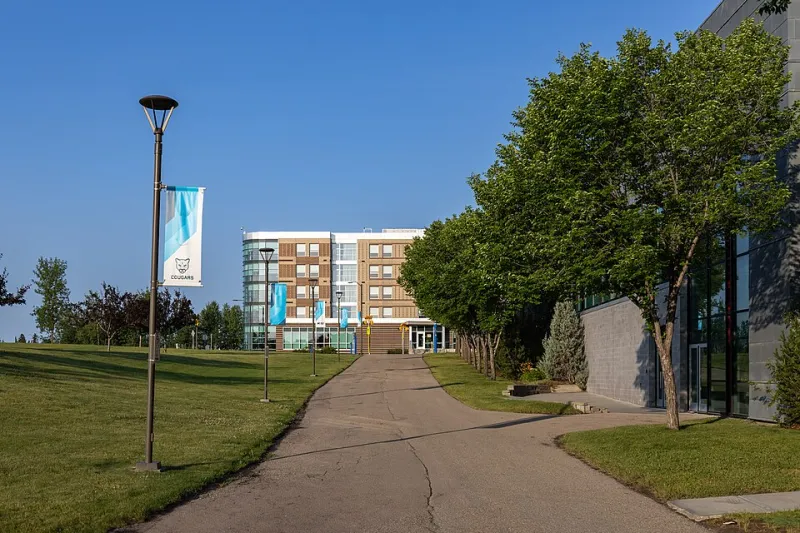
Photo: Chris Woodrich, CC BY-SA 4.0, via Wikimedia Commons
There's a moment most Canadian student-athletes can describe with uncomfortable precision. It's not a game-winner or a podium finish. It's quieter than that — a phone call, maybe, or a conversation after practice. Someone on the other end is offering them something real. A contract. A tryout. A shot at the thing they've been grinding toward since they were kids lacing up skates in a cold arena at six in the morning.
And then comes the other voice. The one that sounds a lot like their parents, their professors, their entire upbringing: But what about your degree?
In Canada, that question carries serious weight.
Education as Identity
Canadians don't just value education — we wear it like armour. Unlike the American college sports machine, where athletic scholarships are openly transactional and leaving early for the pros is practically celebrated, the Canadian system is built on a different cultural contract. You play, yes. But you also study. You finish. You graduate. That's the deal.
University sport in Canada doesn't carry the same commercial infrastructure as the NCAA. There are no multimillion-dollar broadcast deals propping up U Sports programs. Scholarships are more modest. The spotlight is dimmer. And yet, the expectation to see it through academically remains just as loud — sometimes louder — than it is south of the border.
For athletes navigating that space, the pressure is real and it comes from every direction.
"My family sacrificed a lot to get me to university," says one former U Sports basketball player who left his program in his third year after attracting interest from a European league. "Leaving felt like I was throwing that back in their faces. Even when I knew it was the right call for my career, I felt guilty for months."
That guilt isn't unique to him. It's a recurring theme for Canadian athletes who find themselves standing at that fork in the road.
The Window Is Narrow. It Doesn't Wait.
Here's the cold reality that nobody puts on the university brochure: the professional window for most athletes is brutally short. Depending on the sport, the prime years for getting noticed, signed, and developed are often compressed into a three-to-five-year stretch. Miss that window — even by a year — and the opportunity may not come back.
For a basketball player, leaving after second year might mean catching the attention of a scout at the right moment. Staying to finish the degree might mean graduating into a market that's moved on. For a track athlete, a season lost to academic pressure can mean the difference between making a national team and watching the trials from home.
This isn't pessimism. It's arithmetic.
And Canadian athletes are doing that math in real time, often without the guidance infrastructure their American counterparts can access. NCAA programs employ advisors specifically to help athletes navigate early departure decisions. Canadian university programs, with smaller budgets and fewer resources, often can't offer that same support.
"I didn't have an agent. I didn't have a sports lawyer. I had my coach, my parents, and Google," says one former U Sports hockey player who left his program to sign with an ECHL team. "You're making a life decision with whatever tools you can find."
What It Actually Costs
The financial math cuts both ways, and it's more complicated than it looks.
On one side: a professional contract, even a modest one, can provide income that a degree-holder might not see for years after graduating. For athletes from working-class or middle-class families — which is most Canadian athletes — that money matters. It pays back the years of training costs, the travel, the equipment. It gives their families something tangible.
On the other side: the average professional career ends before age 30. And when it does, the athlete who left university early is suddenly competing in a job market against peers who finished their degrees and have had years to build professional experience. The degree they didn't finish becomes a gap on a résumé. The skills they didn't develop become obstacles.
Some athletes go back. Many don't. Life gets complicated. Injuries happen. Confidence erodes. The classroom feels foreign after years away.
"I always told myself I'd finish," says one former CFL player who left his kinesiology program in his final year. "I'm 34 now. I haven't gone back yet. I probably should."
The Emotional Weight Nobody Warns You About
Beyond the financial calculus, there's a psychological cost that rarely gets discussed openly. Leaving university early means leaving a community. It means watching your teammates finish what you started together. It means navigating a professional environment — often in a different city, sometimes a different country — without the built-in social structure of campus life.
For young athletes, that isolation can hit hard. The transition from student-athlete to professional athlete isn't just a career shift. It's a full identity transplant, and it happens fast.
And if the professional opportunity doesn't pan out — if the contract gets cut, if the tryout doesn't lead anywhere — the athlete can find themselves in a genuinely difficult place. No degree. No team. No clear path forward.
So What's the Answer?
Honestly? There isn't a clean one. Every athlete's situation is different, and the right call for one person is the wrong call for another.
What Canadian sport culture needs to get better at is making this conversation easier to have — without judgment, without the implicit message that choosing athletic ambition over academic completion is somehow a failure of character. It isn't. It's a legitimate, difficult decision made by young people with limited information and a lot on the line.
The athletes who leave early aren't abandoning their education. Most of them are carrying it with them — the discipline, the structure, the resilience — into whatever comes next.
And the ones who stay? They're not playing it safe. They're betting on themselves in a different way.
Either way, it costs something. The least we can do is acknowledge that honestly.