Invisible and Dangerous: Why Being Canada's Second Choice Is Actually a Superpower
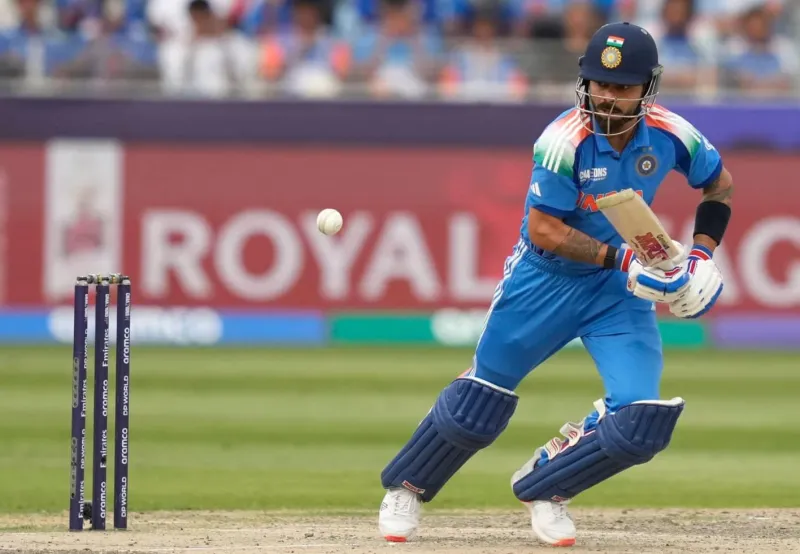
Photo: underdog Canadian athlete training alone in gym determination, via cricketbureau.com
Let's be honest about something Canada doesn't always want to admit: we have a sports hierarchy, and it's not subtle.
Hockey sits at the top. Always has. It gets the airtime, the sponsorship dollars, the national identity attached to it like a flag on a backpack. Below that, there's a rotating cast of sports that get their moment — curling during the Brier, swimming at the Olympics, soccer when a Canadian team is doing something remarkable — and then they fade back into the background noise.
And then there are the athletes who exist in the space below all of that. The ones who don't get the features in national newspapers. The ones whose sport doesn't have a prime-time broadcast slot. The ones who weren't the top recruit, the early phenom, the kid with the buzz.
Here's what I want to argue: those athletes are building something the chosen ones aren't.
The Hype Tax
There's a cost to being anointed early, and it's one we don't talk about enough.
When an athlete gets labelled a future star at 16, they inherit a set of expectations that follow them everywhere. Every stumble gets magnified. Every off-season becomes a referendum on whether the hype was justified. The psychological weight of being the guy — or the woman — before you've actually become anything yet is genuinely heavy. Some athletes thrive under it. A lot of them don't.
The athlete nobody's watching doesn't have that problem. They can fail privately. They can experiment without consequence. They can build their game in the dark, away from the noise, without anyone keeping score.
That freedom is worth more than most people realize.
Canada's Particular Brand of Neglect
In the Canadian context, this plays out in ways that are specific to our sports culture.
Take a wrestler from rural Saskatchewan. Or a bobsledder from a small city in Atlantic Canada. Or a field hockey player from British Columbia who's been grinding at a sport that gets roughly zero mainstream coverage. These athletes aren't just overlooked within their sport — they're overlooked within the entire national conversation about athletics.
They don't get the same access to elite training facilities. They don't get the same coaching networks. They don't get the same exposure to high-level competition early in their development. And yet, Canada keeps producing world-class athletes from exactly these kinds of backgrounds.
The question worth asking is whether the adversity and the achievement are connected — not despite each other, but because of each other.
What the Underdogs Are Actually Learning
When you're not the priority, you develop a particular kind of resourcefulness. You figure out how to get better without the best equipment. You learn to compete against people with more resources and find ways to neutralize that advantage. You get comfortable being the underdog, and over time, that comfort becomes a competitive weapon.
There's also something that happens psychologically when you've been underestimated. It creates a specific kind of motivation — not the fragile kind that depends on external validation, but the durable kind that's self-generated. Athletes who've had to prove something to the world for years don't crumble when a competition gets hard. They've been in that position their whole career.
Compare that to the heavily hyped prospect who's never had to dig deep because talent alone was always enough. When the level of competition rises to meet them — and it always does eventually — they're encountering adversity for the first time. The underdogs have been living there for years.
The Late Bloomer Advantage
Canada has produced a remarkable number of athletes who didn't arrive on the big stage until later than expected. Athletes who were cut, overlooked, or simply not considered serious contenders until suddenly, they were.
Think about what that trajectory actually looks like from the inside. Years of competing without recognition. Years of wondering if the effort was worth it. Years of watching athletes with more hype get more opportunities, more support, more everything — and choosing to keep going anyway.
By the time those athletes break through, they've been tested in ways that the early phenoms haven't. They know how to handle disappointment because they've handled a lot of it. They know how to stay focused when nobody's cheering because they've done it for years in empty gyms and underfunded facilities.
That's not a disadvantage they've overcome. That's a curriculum they've completed.
The Sponsorship Desert Builds Grit
Here's another angle worth considering: the athletes who don't attract early sponsorship attention are forced to fund their own development. They work jobs around their training schedules. They fundraise. They make sacrifices that the athletes with corporate backing don't have to make.
And in making those sacrifices, they build a relationship with their sport that's fundamentally different. It's not transactional. Nobody's paying them to show up. They're showing up because they genuinely, stubbornly refuse not to.
That kind of commitment doesn't evaporate when things get difficult. If anything, it gets stronger.
The Quiet Ones Are Coming
The next wave of Canadian athletic excellence isn't going to announce itself. It's going to arrive quietly, from places that weren't on the radar, in sports that weren't getting the attention, built by athletes who trained in the margins of the national conversation and turned that marginalization into fuel.
They've been doing it for years. We just haven't been watching.
Maybe that's exactly how they like it.