Quiet Before the Storm: Why Canadian Athletes Let Their Results Do the Talking
Picture the scene. Two athletes are warming up before a major competition. One is loud, animated, drawing attention — telling anyone who'll listen about how this day belongs to them. The other is calm, almost unremarkable. They stretch, they breathe, they nod politely when a reporter shoves a microphone in their face and says something measured like, "We've put in the work. We'll see how it goes."
Guess which one tends to be Canadian.
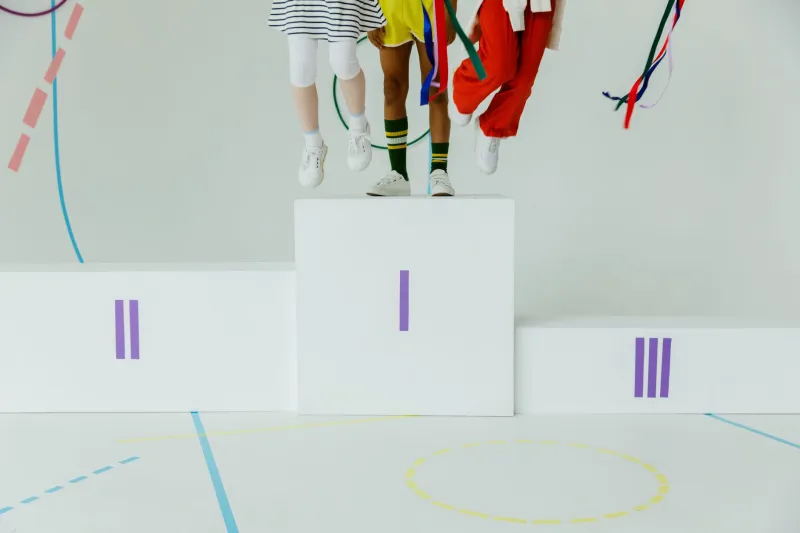
And guess which one, more often than not, is standing on the top step of the podium when it's all said and done.
This isn't a coincidence. It's not even entirely conscious. For a lot of Canadian competitors, the art of downplaying — of deliberately underselling what they're capable of — is baked into the culture they were raised in. But sports psychologists and coaches who've worked with Canadian athletes at the highest levels will tell you something interesting: what looks like modesty from the outside is actually one of the most sophisticated performance tools in the game.
The Culture Behind the Quiet
Canadians, broadly speaking, are not a nation of braggarts. That's not a knock — it's actually something worth examining seriously. From minor hockey dressing rooms in Saskatoon to track clubs in Halifax, young athletes in this country are routinely taught that your performance speaks, and that anything you say before the whistle blows is noise.
There's a phrase you hear a lot in Canadian sporting culture: let your game do the talking. It's almost a cliché at this point, but clichés survive because they carry truth. The athletes who've internalized this idea most deeply tend to arrive at big moments with something their louder competitors often lack — internal validation.
They don't need the crowd to believe in them. They don't need the media to hype them up. They've already done the work, they know what they're capable of, and that knowledge sits quietly in their chest like a loaded spring.
Dr. Sarah Millington, a sport psychologist who has consulted with national-level programs across Canada, describes it this way: "What we sometimes call humility in Canadian athletes is really a form of inward focus. They're not performing confidence for the room — they're preserving it for the moment that matters. That's a fundamentally different psychological posture than what you see in athletes who need external energy to get themselves up."
When Low Expectations Become a Weapon
Here's where it gets tactically interesting. When a Canadian athlete steps into a high-pressure situation having publicly downplayed their chances, something useful happens: the pressure shifts.
The rival who talked big now has to deliver on a promise made in front of cameras. The crowd expects fireworks. Every stumble gets magnified. Meanwhile, the quiet Canadian is operating in a kind of psychological free space — expectations are low, the spotlight is elsewhere, and they can simply compete.
Sports psychology has a term for the phenomenon of performance declining under self-imposed pressure: choking. It happens when the conscious mind tries to micromanage physical processes that work better on autopilot. Athletes who've built their pre-competition identity around dominance are particularly vulnerable to it. When the moment gets big and the nerves spike, all that bravado can curdle into anxiety.
The athlete who walked in saying "we'll see what happens" doesn't have that problem. They've given themselves permission to just play.
"There's real protection in low-profile expectations," says Dr. Millington. "Not because you don't believe in yourself — quite the opposite. But because you've separated your self-worth from the outcome. You're free to perform."
The Quiet Confidence Playbook
So what does this actually look like in practice? It's worth breaking down the mechanics, because there's a difference between genuine humble confidence and simply being meek.
They control the narrative without making a scene. When Canadian athletes deflect questions about being favourites or avoid predictions, they're not being evasive. They're refusing to let external framing dictate their internal state. They choose their words carefully — polite, measured, non-committal — and then they go back to what matters.
They train with an intensity that never needs an audience. This is maybe the most telling part. The pre-competition quiet is authentic because it mirrors how they train. Early mornings, hard reps, no fanfare. The competition is just another session, scaled up. That consistency — between how they prepare and how they present — is where the real psychological stability comes from.
They use the underdog label as fuel, not a burden. When the world counts them out, Canadian athletes have a remarkable tendency to file that information away and use it. Not with anger, not with a chip on the shoulder that becomes a distraction — but with a quiet, almost amused resolve. Okay. We'll see.
The Trap of Trash Talk
It's worth being honest about what this approach is not. Humility as a performance strategy isn't about being passive or lacking competitive fire. Some of the most ferociously competitive athletes Canada has ever produced have also been among its most publicly understated.
Trash talk, on the other hand, has a ceiling. It can fire up a crowd and rattle a younger opponent. But at the elite level, where everyone in the field is mentally tough and physically prepared, psychological warfare through bravado tends to backfire. It creates obligations. It gives opponents something to rally against. It shifts focus outward when the most important battles are always internal.
Canadian athletes, almost by cultural reflex, tend to avoid building those obligations. And that means when they perform — when they really perform — it lands differently. It surprises people. It shifts momentum. There's something almost cinematic about watching an athlete the world underestimated rise to the exact moment they were quietly preparing for all along.
Training the Mind to Stay Small Before Going Big
For athletes looking to develop this kind of psychological approach, the starting point isn't learning to be quiet in interviews. That's the surface. The real work is internal.
It starts with building genuine confidence through preparation — the kind that doesn't need external reinforcement because it's grounded in actual evidence. You know what you've done in training. You know the hours, the sessions, the adjustments, the improvements. That knowledge becomes armour.
From there, it's about developing what some coaches call process focus — an almost obsessive attention to the immediate task rather than outcomes or optics. What do I need to do right now? Not: what will people think if I win? Not: what happens if I lose? Just: what is the next right action?
When that becomes your default mode, the pre-competition modesty stops being a performance. It becomes the truth. You genuinely aren't thinking about the outcome. You're thinking about the work.
And then you go do the work.
The Most Canadian Flex of All
There's something almost poetic about the whole thing, honestly. In a sports landscape increasingly dominated by personal brands, highlight reels, and manufactured confidence, the most effective psychological edge might just be the oldest and least flashy one in the book.
Shut up. Prepare. Deliver.
Canadian athletes didn't invent humility. But somewhere along the way, they figured out how to make it dangerous. And if you're lining up against someone flying the Maple Leaf who hasn't said much in the lead-up — who's been polite, measured, and almost suspiciously calm — maybe take a second to worry about that.
Because they probably already know something you don't.