Rise Again: The Deliberate Science Behind How Canadian Athletes Engineer Their Greatest Comebacks
There's a moment every athlete knows. The one where the dream doesn't just pause — it shatters. A blown ACL at the worst possible time. A career-defining loss that leaves you staring at the ceiling at 2 a.m. A body that simply stops cooperating after decades of punishment. For most people, that moment is the end of the story.
For a certain breed of Canadian athlete, it's just the end of chapter one.
What separates those who fade from those who come back swinging isn't luck, raw talent, or even physical ability. It's a deliberate, almost methodical approach to rebuilding — one that starts in the mind long before it shows up in the gym, on the ice, or on the track. Across sports, across provinces, across generations, Canada's most resilient competitors have developed what amounts to a shared blueprint for the second chapter. And it's worth paying attention to.
Step One: Sit in It (But Not Too Long)
The first instinct after a major setback is to either spiral into despair or immediately pivot to toxic positivity — the "everything happens for a reason" deflection that skips over the grief entirely. Neither works.
Sport psychologists who work with Canadian national-level athletes consistently point to the same starting principle: you have to acknowledge the loss before you can move past it. Grieve the season. Grieve the opportunity. Grieve the version of yourself that existed before the injury or the defeat. That process is not weakness — it's the foundation everything else gets built on.
The athletes who come back strongest tend to give themselves a defined window for that grief. Not indefinite wallowing, but deliberate, honest processing. A week. Two weeks. Long enough to feel it fully, short enough that it doesn't become identity.
Once that window closes, the work begins.
Reframe the Narrative Before You Reframe Your Training
Here's where the mental architecture of a comeback really starts to take shape. The story an athlete tells themselves about what happened — and why — determines almost everything about what comes next.
"I got injured because I pushed too hard" is a very different story from "I got injured, and now I know exactly what I need to fix." The facts might be identical. The trajectory they create is completely different.
Canadian athletes who've engineered successful returns consistently describe a moment where they consciously chose their narrative. Not delusion — nobody's pretending a torn labrum is secretly a gift. But a deliberate decision to treat the setback as data rather than verdict. What did the body reveal? What did the competition expose? What did the time away from sport clarify about motivation, about values, about what they actually want?
That reframe isn't passive. It's work. Journalling, conversations with coaches and mentors, sometimes formal sessions with a sport psych. The goal is to walk out of the dark period with a clear-eyed answer to a single question: What am I coming back for?
Build the Plan Backwards
Once the "why" is locked in, the best comeback athletes in Canada get almost obsessively tactical. They identify the target — a specific competition, a performance standard, a fitness benchmark — and then work backwards from it.
This reverse-engineering approach strips out the vagueness that derails most recovery timelines. Instead of "I want to get back to where I was," the goal becomes "I want to compete at nationals in fourteen months, which means I need to be at 80 percent capacity by month six, which means I need to hit these specific milestones in the first three months of rehab."
Granularity is everything. Weekly targets. Honest check-ins. Adjustments made without ego when the body or the schedule demands it. Canadian coaches who've guided athletes through this process describe it as building a staircase rather than staring at a ceiling — every small win creates the next step, and the whole structure starts to feel achievable in a way that the summit never does when you're staring up at it from the bottom.
The Support Architecture Nobody Talks About Enough
Comebacks are almost never solo missions, even when they feel that way. Behind every Canadian athlete who's successfully reinvented themselves is a network of people who made it possible — and building that network intentionally is one of the most underrated elements of the process.
This means more than just having a good physio. It means identifying who in your circle will hold you accountable without crushing you, who will tell you the honest truth when you're ready to rush back too soon, and who will remind you of your own capability on the days when you can't access it yourself. Training partners, coaches, family members, sport psychologists — the athletes who come back strongest tend to be the ones who've gotten over the Canadian instinct to gut it out alone and actually leaned on the people around them.
There's also something to be said for community in a broader sense. Connecting with other athletes who've gone through similar setbacks — whether through formal programs, social media, or just word of mouth — creates a kind of proof of concept. Someone else came back from this. That matters more than most people admit.
The Training Methodology of the Second Chapter
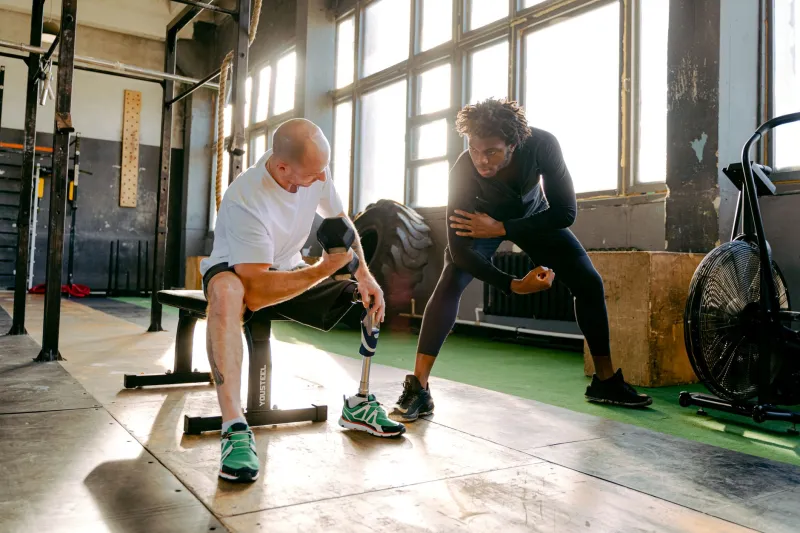
Physically, the comeback blueprint looks different from standard periodization. The athletes who return strongest aren't the ones who tried to sprint back to peak performance — they're the ones who treated the rebuild as an opportunity to address every weakness the original training cycle had ignored.
That means longer base phases. More attention to movement quality over load. Deliberate work on the mental side of competition, not just the physical. And a willingness to look different in the short term — to be slower, lighter, or less explosive than before — in service of a foundation that will ultimately support a higher ceiling.
It also means being ruthlessly honest about readiness. The return-to-sport conversation in Canada has evolved significantly over the past decade, with more emphasis on psychological readiness alongside physical benchmarks. An athlete who's technically cleared to compete but mentally fragile is not ready to compete. The best coaches know this. The best athletes learn it.
Your Own Second Chapter
You don't have to be a national team athlete for any of this to apply. The comeback blueprint scales.
Maybe your setback is a training plateau that's been dragging for six months. Maybe it's a recreational league injury that's kept you off the field longer than expected. Maybe it's the slow creep of life — work, family, years — that pulled you away from sport and left you wondering if you can find your way back.
The framework is the same. Sit in it honestly. Reframe the narrative deliberately. Build the plan backwards from a specific target. Assemble the support you actually need. Train the foundation before you train the ceiling.
Canada has always produced athletes who find something extra after the bottom falls out. That's not a coincidence or a cultural quirk — it's a methodology. And it's available to anyone willing to do the work.
The second chapter doesn't write itself. But for those willing to pick up the pen, it tends to be the best part of the story.