Why Canadian Athletes Just Won't Quit: The Science and Swagger Behind an Unstoppable Work Ethic
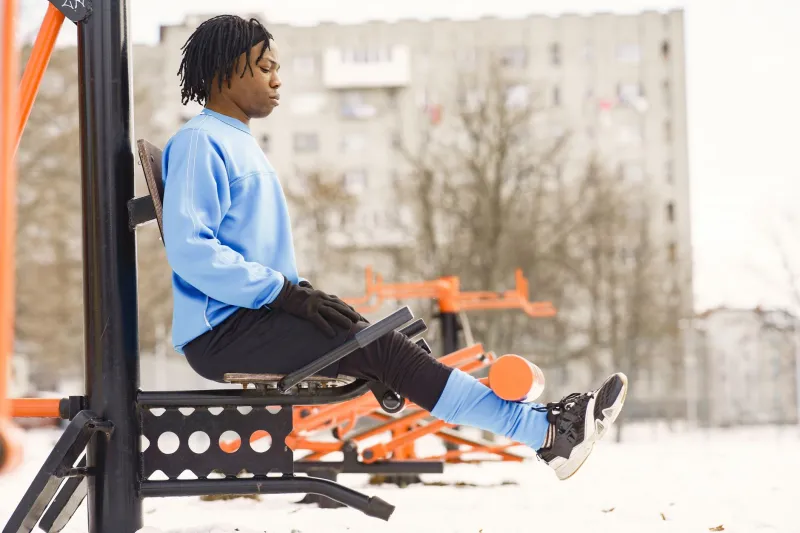
Let's be real for a second. Canada isn't a country that gets handed things in sport. We're not swimming in the same funding pools as the Americans. We don't have the population depth of China or the year-round training climates of Australia. What we do have — and what shows up on the international stage with almost eerie consistency — is a work ethic that makes athletes from better-resourced countries genuinely nervous.
So where does it come from? And more importantly, how do you actually build it?
Because here's the thing: the legendary grind of Canadian athletes isn't just a feel-good national narrative. There's real science behind what drives it, and there are real, actionable habits underneath the inspiration. Let's get into both.
The Environmental Advantage Nobody Talks About
Start with the obvious: Canada is not an easy place to train. Winters are brutal, facilities outside major urban centres are often limited, and the distance between where many Canadian athletes grow up and where elite competition actually happens is — sometimes literally — thousands of kilometres.
Those aren't excuses. They're inputs.
Research in environmental psychology consistently shows that individuals who develop competence in challenging, resource-limited conditions build stronger intrinsic motivation than those who develop in abundant, low-friction environments. In plain language: when the external conditions are hard, you learn to generate drive from the inside. You stop waiting for perfect circumstances and start performing in imperfect ones.
For Canadian athletes, this translates directly to competitive durability. Training through a February in Saskatchewan, driving four hours to a regional competition, or making a $200 equipment budget stretch to cover an entire season — these aren't just character-building clichés. They're experiences that literally rewire how your brain responds to adversity. The neuroscience term is stress inoculation, and Canadian winters have been administering it for generations.
Culture Eats Strategy for Breakfast
Beyond the environment, there's a cultural dimension to Canadian athletic work ethic that doesn't get examined closely enough. Canadian sport culture — particularly at the grassroots level — places enormous value on effort over outcome. You see this in minor hockey arenas, in community track clubs, in the way junior coaches talk to their athletes across virtually every discipline.
The message, repeated over and over from early ages, is that you control your effort, not your results. Work hard, stay humble, show up consistently. The scoreboard takes care of itself.
This sounds simple, almost clichéd. But the psychological research on it is surprisingly robust. Athletes who are raised in effort-oriented cultures develop what psychologists call a "growth mindset" baseline — a default assumption that ability is buildable rather than fixed. And growth mindset, it turns out, is one of the most reliable predictors of long-term athletic development and competitive resilience.
It's not that Canadian athletes are born tougher. It's that the culture around Canadian sport systematically reinforces the belief that toughness is something you build — and then backs that belief up with environments that demand it.
The Neuroscience of Outworking People
Here's where it gets genuinely interesting. Work ethic isn't just a mindset — it has a neurological architecture, and understanding that architecture gives you a roadmap for building it deliberately.
At the core is dopamine, the neurotransmitter most associated with motivation and reward. The popular understanding of dopamine is that it's released when you achieve something — you win, you feel good. But that's not quite right. Dopamine is actually most active in the anticipation of reward, particularly when that reward requires effort to obtain.
What this means practically is that athletes who structure their training around consistent, effortful progress — rather than waiting for big wins — are essentially training their dopamine systems to fire more reliably. Every completed session, every small personal record, every moment of pushing through discomfort becomes a reward signal. Over time, the effort itself becomes the reward.
This is why elite athletes often describe their training as something they genuinely crave rather than endure. It's not masochism. It's a neurological adaptation built through consistent, deliberate practice. And it's available to anyone willing to put in the reps to develop it.
Three Things You Can Actually Do Starting This Week
Enough theory. Here's how to start building the Canadian work ethic blueprint in your own training, right now.
1. Manufacture adversity deliberately. Don't wait for conditions to be hard — make them hard on purpose. Train outside when the weather is rough. Finish sessions when you're tired rather than when you feel fresh. Remove the comfort variables that your body is using as excuses. This isn't about being reckless. It's about systematically expanding your tolerance for discomfort so that when real adversity shows up, it doesn't feel foreign.
2. Track effort, not just outcomes. Switch at least part of your training log from results-focused to effort-focused. Instead of only recording times, weights, or scores, start recording effort ratings — how hard did you push, how present were you, how well did you execute your process? This retrains your brain to find reward in the quality of your effort rather than only in outcomes you can't always control.
3. Build a short-term commitment streak. Work ethic is a habit before it's an identity. Pick one specific training behaviour — showing up three times a week, finishing every session with five extra minutes of conditioning, whatever fits your context — and commit to it for 30 days without exception. Streaks build identity. Once you've done something consistently enough to call it a pattern, it starts to feel like who you are rather than what you're trying to do. That's when work ethic stops being effortful and starts being automatic.
The Canadian Edge Is Real — And It's Yours
There's no secret ingredient. The work ethic that makes Canadian athletes punch above their weight on the world stage isn't handed down through genetics or gifted by geography. It's built, habit by habit and session by session, in gyms and rinks and fields across this country by people who decided that the obstacles in front of them were going to make them stronger rather than stop them cold.
The science backs it up. The culture reinforces it. And the results speak for themselves.
You want to fight like a Canadian? Start by showing up when it's hard. Then do it again tomorrow.