Fighting What You Can't See: The Hidden Mental Battles Canadian Athletes Are Winning in Silence
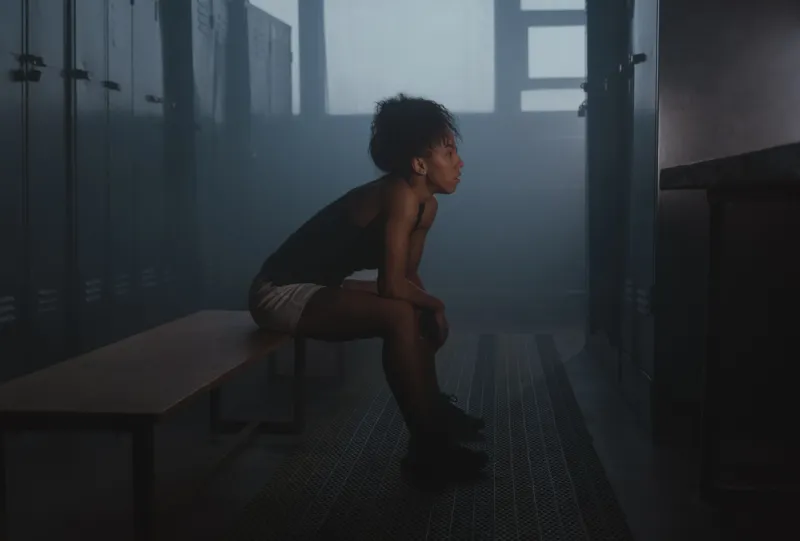
There's a particular kind of loneliness that comes with an injury nobody believes in.
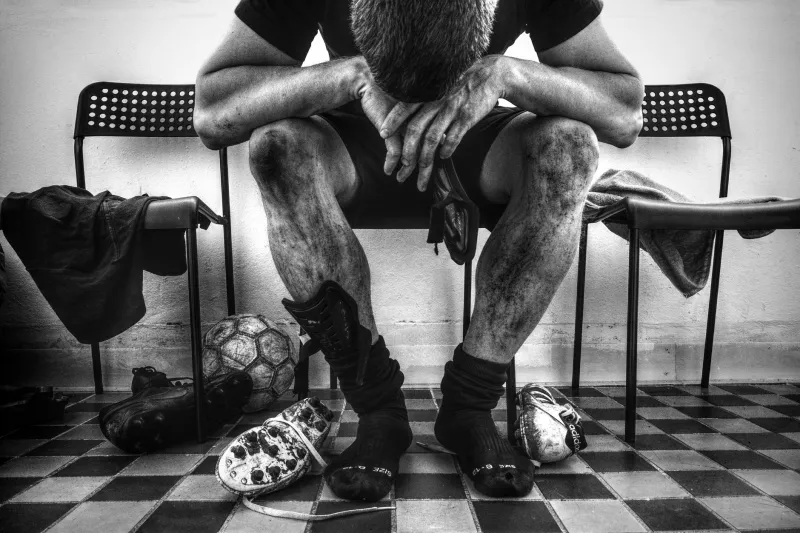
You walk into a clinic. The X-ray comes back clean. The MRI shows nothing alarming. The doctor gives you a half-shrug and tells you to rest, maybe stretch more, maybe take some ibuprofen. And yet the pain is still there — grinding, persistent, maddening. Or maybe it's not pain at all. Maybe it's a fog that won't lift, an anxiety that spikes every time you lace up, a dread that sits in your chest where the fire used to be.
For a significant and growing number of Canadian athletes — from junior hockey players in Lethbridge to marathon runners grinding through Vancouver's wet winters — this is the reality. The injury nobody sees. The battle that never makes the highlight reel.
And quietly, fiercely, they're learning how to fight it.
When the Body Lies (Or Tells a Different Truth)
Chronic pain, mental health struggles, and persistent soft-tissue injuries that don't photograph well have long been the uncomfortable footnotes of high-performance sport. They don't draw the same sympathy as a broken leg or a torn ACL. There's no dramatic moment, no surgery, no obvious recovery arc. Just an athlete grinding through something invisible — often while being told, implicitly or explicitly, to toughen up.
Sports psychologists across Canada are pushing back hard on that narrative.
"The psychological load of an invisible injury is often heavier than a structural one," says one Ontario-based sport psychologist who works with varsity and professional athletes. "With a visible injury, there's a roadmap. People believe you. With chronic pain or mental health challenges, athletes are often fighting two battles simultaneously — the condition itself and the doubt it creates about their own legitimacy."
That doubt is corrosive. It chips away at confidence in ways that pure physical pain rarely does. And in a culture that celebrates grit — that practically worships the athlete who plays through — admitting you're struggling with something nobody can see can feel like a kind of failure.
It isn't. But telling yourself that, and actually believing it, are two very different things.
The Internal Toolkit Canadian Athletes Are Building
What separates the athletes who navigate invisible injuries from those who get buried by them isn't talent or toughness in the traditional sense. It's the quality of their internal toolkit — the mental strategies they've built, often through hard experience, to manage what they can't control.
Reframing the narrative. One of the most powerful tools sports psychologists recommend is learning to separate identity from physical state. An athlete who defines themselves entirely through performance is shattered when performance becomes impossible. But an athlete who understands that they are more than their output — that their value isn't conditional on what their body does on a given day — has a foundation that chronic pain or mental health struggles can't fully demolish.
This sounds simple. It is not simple. It takes deliberate, repeated work to internalize. Many Canadian athletes are doing that work through journalling, therapy, and structured reflection practices that are finally being taken seriously at the national sport organization level.
Radical acceptance without resignation. There's a meaningful difference between accepting a difficult reality and giving up on changing it. Athletes dealing with persistent injuries often swing between denial — pushing through in ways that make things worse — and despair, where the condition feels permanent and total. The middle path is harder to walk but far more sustainable: acknowledging what's true right now, without projecting it indefinitely into the future.
"I had to stop fighting the pain like it was an enemy I could beat into submission," one Canadian middle-distance runner explained in a conversation shared with us by her coach. "When I started treating it more like information — like my body was trying to tell me something instead of betray me — everything shifted. Not overnight. But it shifted."
Community as armour. Canada's training culture has always had a communal dimension — the early morning ice times, the club runs in the cold, the shared suffering that builds something between teammates that's hard to name but impossible to fake. For athletes dealing with invisible injuries, that community becomes especially critical. Isolation accelerates decline. Connection, even imperfect connection, creates a buffer.
Coaches and teammates who ask the right questions — not just "how's the knee?" but "how are you actually doing?" — can change the trajectory of an athlete's relationship with an invisible struggle. It costs almost nothing. It matters enormously.
The Mental Health Piece Nobody Wants to Lead With
Let's be direct about something: mental health struggles are injuries. Full stop.
Anxiety that spikes before competition, depression that flattens motivation, disordered eating patterns, burnout that masquerades as laziness — these are not character flaws. They are conditions, and they respond to treatment the way physical injuries respond to physiotherapy. Imperfectly, non-linearly, but genuinely.
Canadian sport is slowly catching up to this reality. Organizations like the Canadian Centre for Mental Health and Sport are building infrastructure that didn't exist a decade ago. More athletes are speaking openly — not because vulnerability has become trendy, but because the cost of silence has become undeniable.
What's particularly Canadian about the emerging conversation, perhaps, is its pragmatism. There's less interest in grand declarations and more focus on the practical: What tools work? What does the process actually look like? How do you compete at a high level while managing something that isn't going away?
Those are the right questions. And the athletes asking them are, in a very real sense, fighting like Canadians — heads down, doing the unglamorous work, refusing to quit on themselves even when nobody's watching.
The Long Game
Invisible injuries don't resolve in a single dramatic moment. There's no surgery, no cast coming off, no clear line between injured and healed. Recovery — if that's even the right word — tends to be gradual, nonlinear, and deeply personal.
What the athletes navigating this terrain successfully seem to share is a willingness to play the long game. To measure progress in months rather than weeks. To celebrate small stabilizations rather than waiting for complete resolution. To keep showing up, even imperfectly, even on the days when showing up is the hardest thing they do.
That's not a small thing. In a sports culture obsessed with highlights and breakthroughs, choosing to persist through something slow and invisible and unspectacular is its own kind of courage.
Canadian athletes have always known how to fight in conditions that aren't ideal. Cold rinks, limited budgets, long drives between competitions, a sports culture that doesn't always make it easy. Adding invisible injuries to that list doesn't break the pattern — it just extends it.
The battle nobody sees is still a battle. And the athletes fighting it deserve the same recognition we give to anyone who steps into the arena, takes the hit, and keeps going.
That's what fighting like a Canadian looks like, even when — especially when — nobody's watching.